



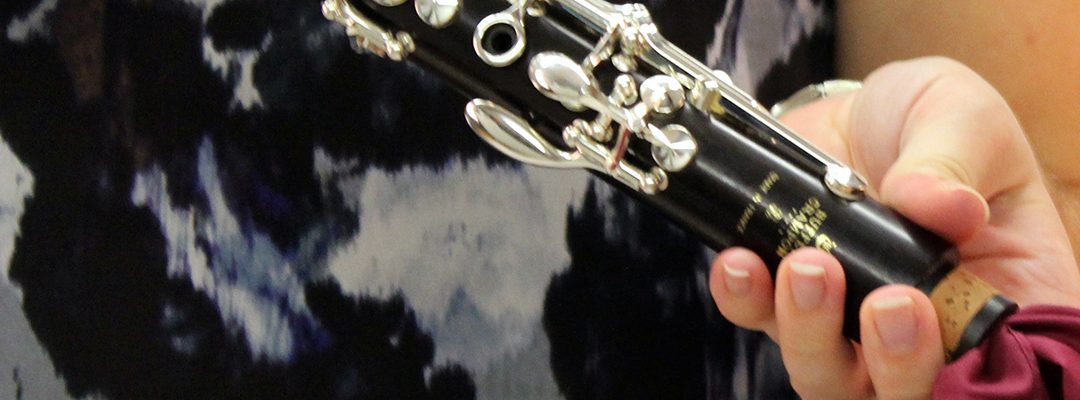
Proper maintenance is essential to keeping your woodwind instrument in top playing condition. While each instrument in the woodwind family is unique and in need their own care kits, some maintenance is universal. All woodwinds need regular cleaning and careful handling.
With that in mind, West Music experts have put together their list of the top 10 care tips for new woodwind players, plus a bonus tip!
- When assembling your instrument never touch or pick up your instrument by the keys. See your method book for directions on how to carefully put together your instrument or ask your instructor for help.
- Never eat or drink anything while playing except for water. Doing so will lead to scary UFO’s (Unidentified Food Objects) invading your instrument. Some players will also brush their teeth or rinse their mouths immediately before playing as an additional preventative measure.
- After playing, remove moisture from the inside of the instrument. For smaller instruments, use a cleaning rod with a soft moisture swab attached through the slit in the end. For other instruments, you’ll need a swab with a string that you can pull through. Make sure you insert the string at the end or bell of the instrument so that you aren’t pulling a wet swab through areas of your instrument that are dry. Silk and microfiber swabs are preferable to cotton.
- Pad Saver rags are not recommended for band instruments because they tend to shed fibers, causing leaks in the keypads. They also tend to trap moisture inside the instrument—the opposite of what we want to do!
- Never use liquid polish or paste such as Silvo. Polishes can gum up the key mechanism and destroy the keypads. Instead, wipe down the keys and body after playing with a tissue or soft cloth. (For saxophones, we suggest a flannel rag.) Use a Q-Tip to clean between the keys. If the instrument appears tarnished, it is best to take it to a qualified technician and have it professionally polished and adjusted.
- If the joints fit too tightly clean the tenons and receivers with a solvent and cloth and try again. Do NOT use cork grease! If the fit is still too tight take your instrument to a qualified technician. Never force the joints together as you may bend the keys.
- For flutes check the position of the head joint cork periodically using your cleaning rod. The notch in the rod should align with the middle of the aperture of the flute lip plate. Also, check for leaks in your head joint by closing the aperture hole with your thumb and sucking the air out of the tenon end.
- For all other instruments, you will need to clean the mouthpiece regularly! Use a mouthpiece cleaning brush or an old toothbrush in warm (not hot) water. If the water is too hot you can warp the plastic mouthpiece.
- Chipped mouthpieces should be replaced with new mouthpieces.
- Never store cleaning cloths or anything else in the area of the case designed for your instrument. Your instrument is made to fit snuggly into its case. Storing items with the instrument itself can bend the keys. You should instead store cleaning cloths, reeds, mouthpieces, and other accessories into the pockets and other areas of your case designed to hold them.
BONUS TIP: Your last step is to always latch up the case! All instrument cases either have either latches or zippers that need to be fully closed before moving your instrument. It’s important not to forget this step. Otherwise, when you move your case, your instrument might tumble out and hit the ground.
If you should notice a problem with your instrument, bring it in as soon as possible to be serviced. Repairs to band instruments can take just a few minutes, several hours or sometimes several weeks, so don’t wait until it is too late! Contact your local West Music store to schedule a repair or complete our online Instrument Repair Form.
Aaron Hansen is an experienced K-6 General Music educator, passionate about bringing music to life through the Orff Approach. He holds both a Bachelor’s and a Master’s degree in Music Education from the University of Northern Iowa. Aaron has completed comprehensive Orff Teacher Training, including three levels at the University of St. Thomas and an Orff Master Class. His dedication to the Orff method took him to the Summer International Course at the Orff Institute in Salzburg, Austria. Aaron also shares his expertise by teaching movement at various Orff Teacher Training Courses and conducting workshops for local Orff Chapters.


