




Pro Tips for Choosing the Perfect Ukulele
In the market for a new ukulele? There are countless options to consider. But which features should be your top priorities? What makes a difference in tone, longevity, and overall quality? And all those extras – which ones are actually worth the money?
You can find enticing deals all over the internet. But don’t sacrifice your long-term satisfaction by trying to save a few bucks. Sometimes special features are worth the splurge, as is doing business with music stores that stand behind their instruments. Let’s break things down feature-by-feature, so you’ll know what to look for when shopping for your ukulele.
Sizes: Soprano, Concert, Tenor, Baritone, and Bass
Size is usually the first thing to consider. Are you looking for a soprano, concert, tenor, or baritone ukulele? Soprano, concert, and tenor ukuleles all share the same tuning, meaning you can use the same resources to learn how to play them. All chords and notes are the same. The soprano ukulele is the most common. It’s the traditional ukulele and has that small, thin island sound people often associate with the instrument. Concert and tenor models offer additional volume, a fuller tone, and more room for players with larger hands. The baritone ukulele is tuned more like a guitar and almost feels closer to a small, nylon string guitar than it does a ukulele.

Wood Type
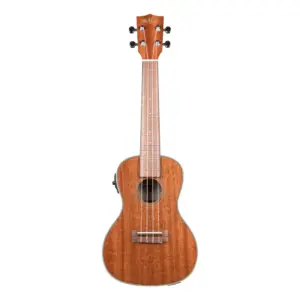
Mahogany is a very common tonewood choice for ukuleles. It creates a warm sound and is naturally abundant, resulting in more affordable pricing. You’ll find it in models like the Makala MK-S soprano ukulele. Spruce is also a popular wood choice for those who prefer a brighter sound. Other choice woods like walnut, maple, ebony, bamboo, cedar, and Hawaiian Koa all produce unique tones. They also come at different price points, due to availability and demand.
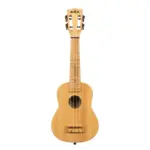
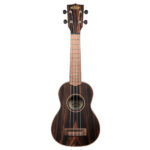
The sides and back of the ukulele may use a different tonewood than the top to combine for a truly unique sound. The wood used can be either a solid piece or laminate, which is sort of like plywood in that it’s a bunch of very small sheets of wood glued together and cured. Solid wood is very important in creating a full tone on a larger instrument such as a guitar, but with ukuleles you can still get a great sound out of all-laminate models. When you’re shopping if it doesn’t explicitly say “solid wood” anywhere it’s most likely laminate. While solid wood does traditionally sound better than laminate, it’s also more prone to cracking in dry environments (which can be prevented with proper ukulele humidification). Plastic ukuleles trade tone for durability and ability to sanitize.
Tuning Machines (Tuning Pegs)
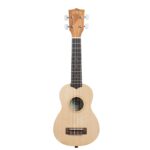
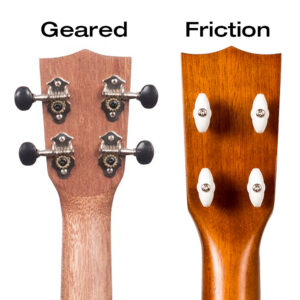
One thing that doesn’t get talked about enough when purchasing a new ukulele is tuners. We’re not referring to clip-on tuners that check your string pitch. We’re talking about the tuning pegs (also known as machine heads) on the headstock of the ukulele. These are the pegs on which the strings wrap around.
Quality tuning pegs can make a world of difference when it comes to keeping your ukulele in tune. Lower-quality tuners are made with cheaper materials. They will be less consistent and will wear out more quickly, resulting in a ukulele that may be difficult to keep in tune. And after all, you’d rather be playing your ukulele and not fighting to get it to hold a tune. Some ukuleles feature friction tuners that can be difficult to fine-tune to the right note, although more and more manufacturers are switching to geared tuners. For example, all Kala ukuleles feature geared tuners.
Intonation
It’s hard to make a ukulele sound good when the notes are off pitch. That’s why intonation is so important. The term “intonation” refers to a string’s ability to stay in tune as you press down on the fretboard to play different notes. The intonation is determined by the saddle, nut, fret placement, and string gauge. While you can easily change the strings yourself, adjusting the nut or saddle can be a much more difficult task that is better suited for a professional luthier. The higher quality the ukulele, the less likely you are to have issues with intonation. Some lower-priced ukuleles will never be able to play in tune without multiple adjustments that may ultimately cost more than the instrument itself.

Bridge
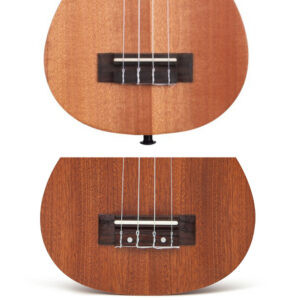
The bridge is small piece of wood that attaches the ukulele’s strings to the body of the instrument. On lower-priced ukuleles, the bridge may be screwed into the body (you may notice two little dots). With nicer models such as the KA-15S, the bridge is glued on, forming a hard bond between the two pieces of wood. This allows for greater transfer of sound from the strings to the body and ultimately a more pleasing tone.
Acoustic, Electric, or Acoustic/Electric?
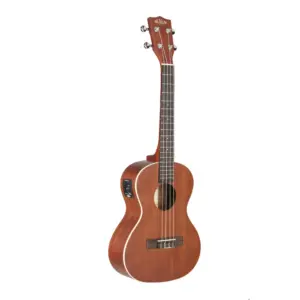
If you think you’d like to plug in your instrument to a speaker to perform louder or into a computer to record yourself, you’ll want an acoustic/electric ukulele. But even if you aren’t sure you need this functionality now, don’t let that stop you from shopping acoustic/electric models. They are built no different from regular acoustic ukuleles, but they have a small pickup (microphone) added in. The electronics will have minimal effect on the weight and tone of the instrument. You can choose a passive pickup which has no battery and has a lower volume output. Or you can opt for an active pickup (small battery required) which boosts the volume of the instrument when it’s plugged in and gives you control over high and low frequencies with a tone control. Some acoustic/electric ukuleles even have a built-in tuner.

Styling and Aesthetics
Believe it or not, looks can be as important as the technical features above. Everyone should want a ukulele that stays in tune, produces a warm, consistent tone, and can hold up to a little wear and tear. But finding a ukulele that draws you in stylistically will make you more likely to pick up and practice your instrument. After taking intonation, tuning, wood type, and other features into consideration, see which ukulele jumps out to you. Which ukulele do you imagine yourself playing? Which ukulele can you not stop thinking about?
Colors and Patterns
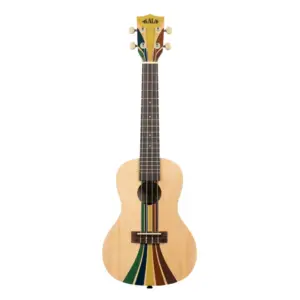
Do you want to sparkle, shine like a rainbow, or even glow in the dark? Do you like the look of natural wood but want something with a little more pizzazz? Or are you looking for something you can’t find? Reach out to us and we’ll help!
Binding
Binding refers to a strip of wood or plastic that goes down the sides of the fretboard or around the front of the ukulele. It’s mainly a visual feature, but it can help hold the instrument together and keep metal frets from poking your fingers if your ukulele is too dried out. However, if your ukulele is this dry, you need to humidify it ASAP before things get any worse.
Finishes
The finish on your ukulele won’t really affect the sound. A high-gloss finish will have your instrument shining like a mirror while a satin or matte finish will give it a more subdued look. Glossy instruments are more likely to show smudges and fingerprints, but the glossiness helps protect the wood against dents or dings.
Variations
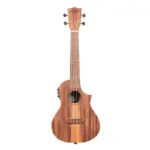
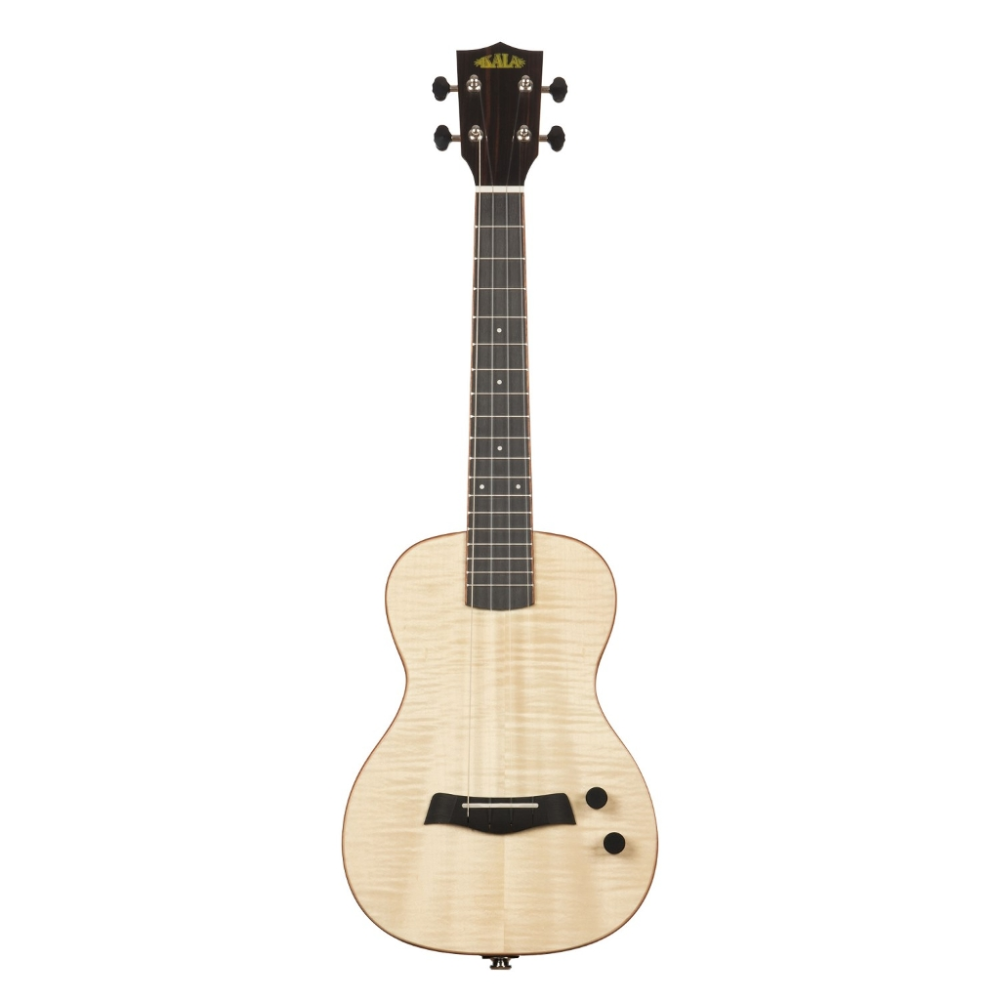
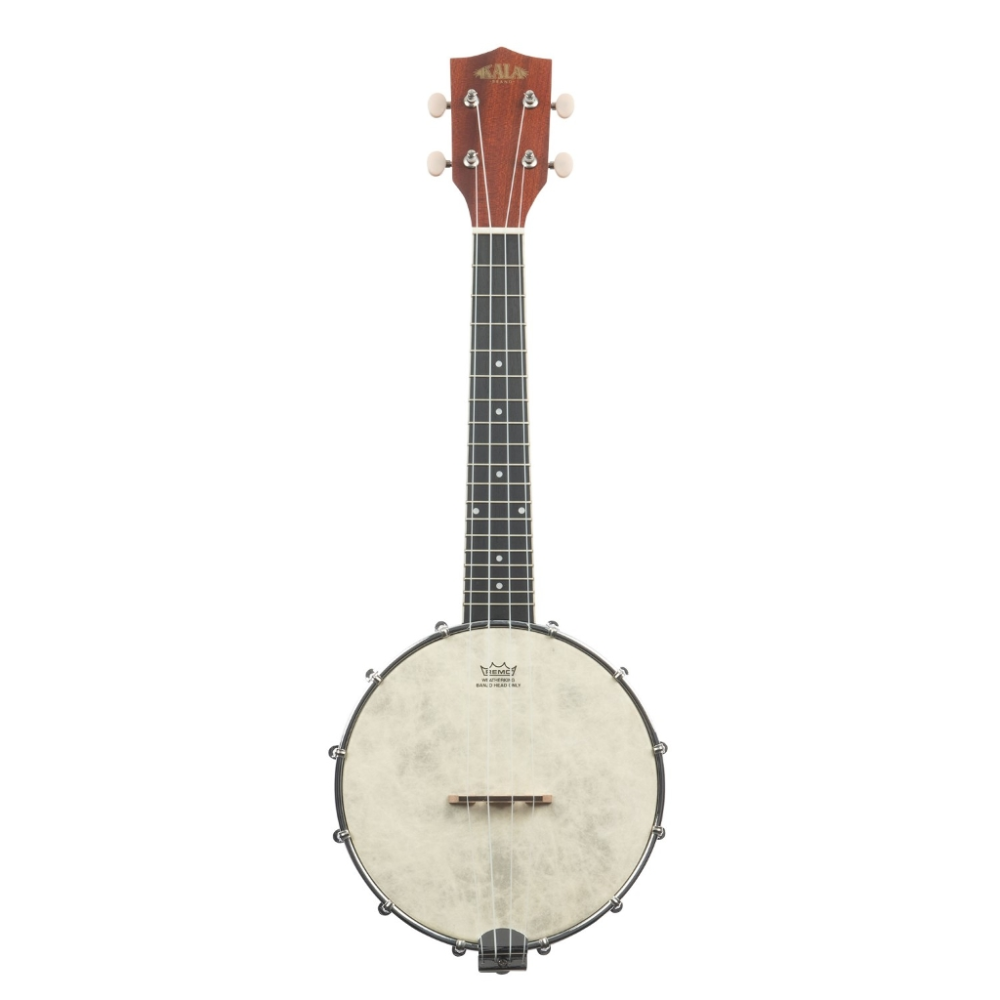
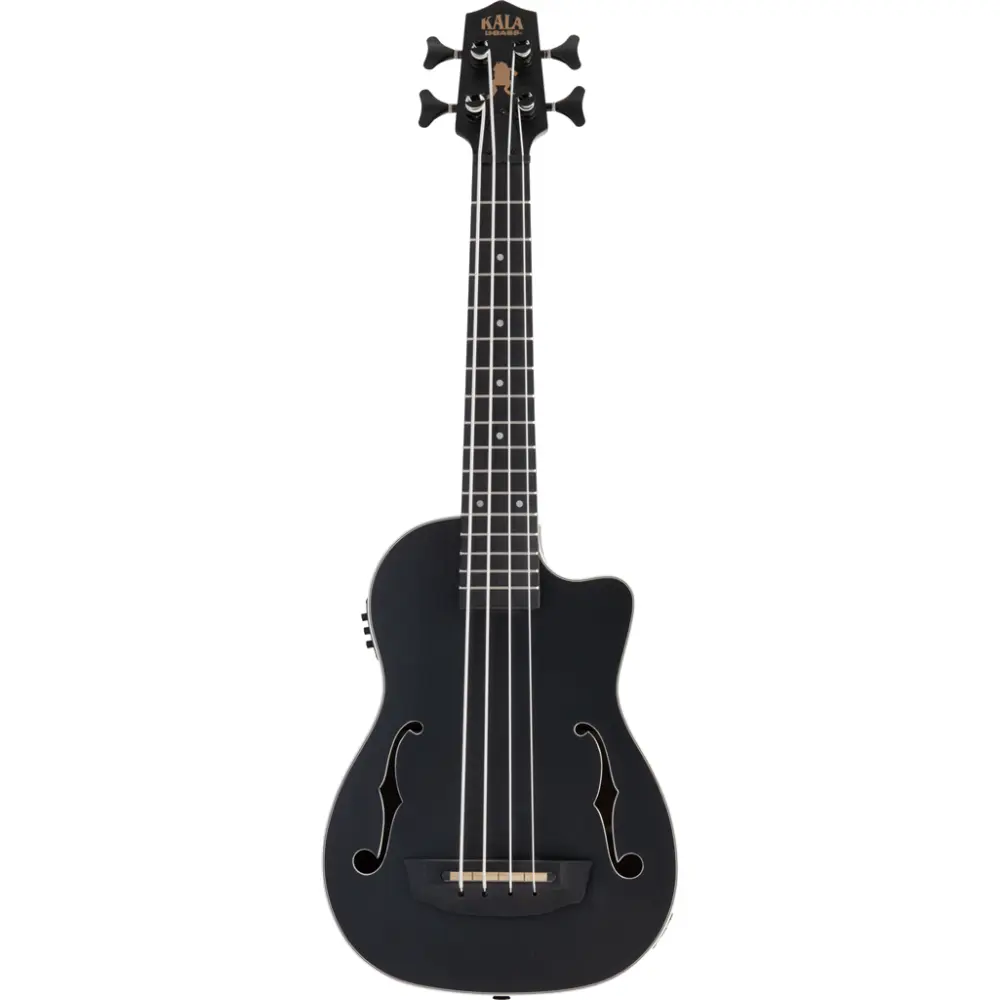
There are too many different choices to mention, but popular ones include banjo ukuleles, solid body electric ukuleles, thin-bodied ukuleles for travelling, ukuleles with a cutaway to allow your fingers access to higher frets on the fretboard, ukuleles with a strap button to allow hands-free playing, bass ukuleles, and more. Think of different ukuleles like different tools in a toolbox – they each have a specific job they’re designed to perform. This is how people end up with an entire collection!
The Best Place to Buy Ukuleles
Lastly, make sure to purchase your ukulele through a retail music dealer that stands behind their instruments. Music dealers curate their selection of products and only carry models they determine to have an acceptable quality-to-price ratio. Large online marketplaces and big box stores treat the ukulele like a commodity that’s no different than a light bulb or toilet plunger. This lack of expertise will show in their product selection, selection guidance, and willingness to honor your purchase should something not meet expectations.
Ryan Brondyke is the Category Manager for guitars, ukuleles, folk instruments, and sound and recording equipment at West Music. Ryan has been playing fretted instruments for 23 years and has worked in the music retail industry for 4 years. In addition to overseeing sales, marketing, and inventory of guitars and ukuleles at West Music, he teaches guitar lessons, builds and fixes effects pedals, plays guitar in a classic rock cover band, and plays drums in alt/indie/rock band Casual Disasters. You'll find Ryan representing West Music at our ukulele booth at the TMEA conference in San Antonio - stop by and say "hi!"


Thank you for this article. I found it very helpful. I love my Kala ukuleles!
This is such a concise and helpful resource! Thanks for cutting through the noise and providing such helpful info.