



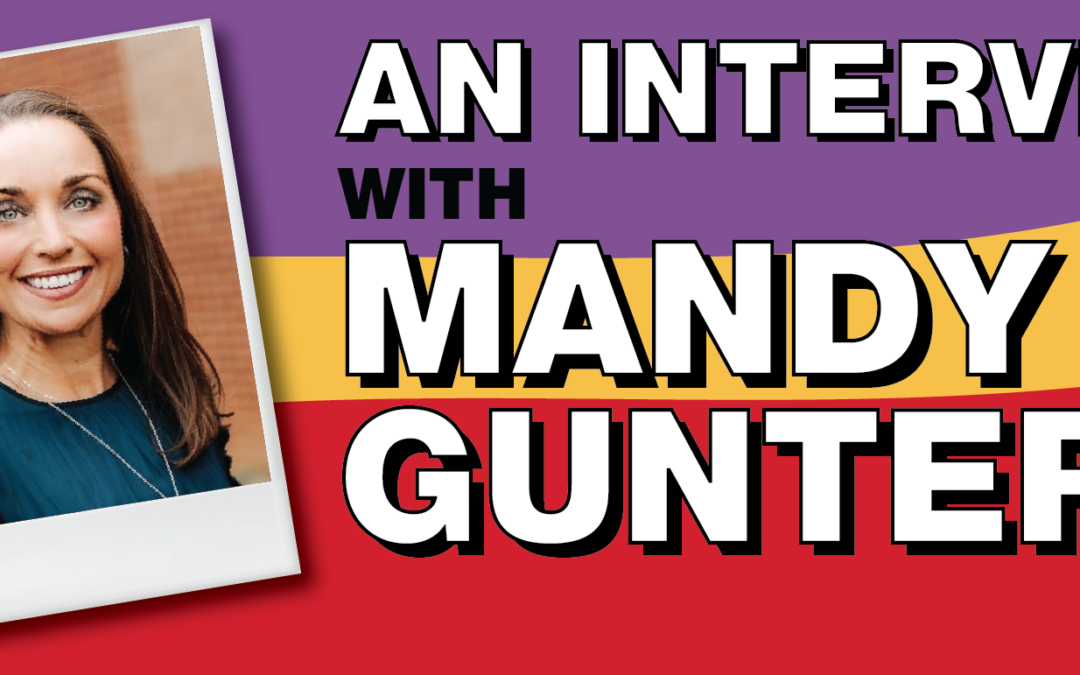
As we close the chapter on the AOSA 2024 National Conference, we’re finishing our series of talking with AOSA authors and leaders. We interviewed Mandy Gunter, who has a brand new book coming out shortly and presented at this year’s conference.
AH: Can you tell us a little bit about yourself and your background? What were your first experiences with Orff Schulwerk and Orff teaching and the Orff process?
MG: I am from Central Georgia and live in the Atlanta area. I’ve been teaching for 20 years, they all kind of run together, though. I was a vocal major in college and I walked into Tiffany English’s classroom to do my student teaching and that was my first experience with the Orff approach, and it has been a joyful, joyful journey since the beginning. The Atlanta area Orff chapter welcomed me with open arms; I served on the board as mailing secretary and then vice president and then President of that chapter. Then, I served on the national board of trustees. I served on the virtual programming subcommittee and now I’m the national conference chair for 2025. So, it’s been this journey that has been woven with kindness of our members of AOSA and the best people around.
AH: What are some of your favorite things about the Orff approach to teaching?
MG: I love that as the educator in the classroom, I can put whatever strategies I need to make the learners in front of me successful. So, if I have students that learn better with movement and I want to use movement for this learning strategy, and then next I’m going to use speech and movement. The way that you can tailor instruction to make students successful to make the classroom joyful; it’s not just this method that you follow, and also it lends us as educators to be really creative about our teaching style, to look at things from different perceptions, to say, “This child needs this. How am I going to scaffold Instruction? How am I going to differentiate with this?” Going deeper into content and how you want to bring out the content to students, it’s a really special thing for me. In 20 years, I’ve changed the buzzwords of what we do because our buzzwords change all the time in education. I’ve never had to change how I teach, so that tells me what an important approach this is and the fact that it’s kid-friendly. The kids have ownership. Teachers have ownership in how they teach and what they do in their classrooms. It fills every bucket for me; the creativity bucket, the being-a-musician bucket, the student-relationship bucket. To me, It’s just the best solid approach built on success that I can have for the people learning from me and for myself, because I also still need to learn in this process.
AH: You’ve been a teacher for a while. What inspired you to switch to writing?
MG:It came from a workshop, actually. I presented a workshop and was told, “This is a book. All of these ideas need to be in one place and people across the nation need access to it. Would you be willing to think about writing a book?” and I was like, “Yes!” That’s another thing about the Orff approach; you want your ideas to be used and utilized by other music educators and you want to use theirs, too. As an organization, our members are constantly going and getting new ideas. We’re constantly learning.
AH: What would you say to other teachers that might be interested, but they’re a little scared of the process of putting a book out there?
MG: One thing I love about Beatin’ Path Publications is that everything is child-centered and everything has been done with students. So, as you’re collecting your materials as you’re teaching this piece or teaching a book, you have multiple chances before putting it out there to work with students and to know if it’s going to be successful. So, it’s using the material that you write. It is making sure the content is appropriate for students. It’s about knowing if the process pieces are there of the outcome that I want. It’s going back and making sure we’re saying our thought process for everyone else and giving everyone else ideas, too, because one of the most beautiful things about the Orff Schulwerk is that somebody can take this and do it completely different than I’m even presenting it. You grow as a person through this whole process; you grow as a musician, looking at all of your words on paper. Honestly, I have loved this process.
AH: What can you tell us about your new book?
MG: It’s called “Stories, Poems, and Play” and it’s geared toward K-5th grade, not just focused on lower elementary or upper elementary; it’s the whole gamut of elementary school.
AH: How did you pick your books for the lessons? Were they ones you’ve already used before or favorites?
MG: Yes, it’s the tried-and-true, but I look for books everywhere. I also have a media specialist who is absolutely amazing and she will bring me books and say, “The kids love this, write something,” or, “There’s a lot of chatter about this book, can you do something with it?” So, to have the resources of people who love literature, just like I do, and who bring it to me is really helpful. I’m always searching out books to figure out what instruments I can put with what, it just happens naturally, too.
AH: The poetry you use in the book though, you wrote that yourself?
MG: I did, and it came from needing stuff for performance and you’re like, “Oh I want the kids to be creative in this way.” Knowing what concepts my students need and writing for them actually helps my teaching and creativity process. So, knowing that I can tailor things to fit them, and knowing where the material came from, also helps me a lot. I do the research on literature and the pieces that we present to our students, so I found that if I write things, then I know what I’m teaching what I need to teach, and I know where the background comes from.
AH: What are some other resources you use in your daily teaching?
MG: Purposeful Pathways! Every day I feel like I use the material from Purposeful Pathways. It’s just the most amazing, amazing curriculum to me. I also use Josh Southard’s book; I love his first book that he put out. I use a plethora of Dr. Ware’s material in my classroom also. It’s very important for me to see that you know the active music educators and how they’re also working with their students and how they’re processing things.
AH: Do you write your own curriculum for the year?
MG: I do. I build the concepts one-on-one. I’m on a block rotation, so I see kids for five days and then they go off to the other specials and then they come back to music. So, when I plan, I plan sequentially, but also in units of what I need to get done during this week of time. I absolutely love planning that way. That’s why I’m pulling materials from a lot of different sources.
AH: What would you tell to your young teacher self when you first started out?
MG: I would say: take more risk with writing sooner. I feel like I was a vocalist that was stuck to the page, and I think my work journey has taught me that it’s ok not to be on the page all the time. If I could go back, I got my work level 1 pretty early in my career, but I’m fully Orff certified and then I’ve had five master classes. I would say just go for it. Take those risks. Take that writing risk or take that composing risk.
AH: What do you think AOSA has meant to you as a teacher and as a person?
MG: I think AOSA has given me my voice. I think that I have learned leadership through AOSA. I think I’ve learned how to approach ideas and be a listener, because, at my core, I am a type A; I want to go in the room and I want to change the room and make it my version of what “Okay” is. Then, the people – you can’t describe. You can only feel the relationships in this organization since we are musicians and because we make ensemble work and we come to a place where we all work together. We have this mutual love of what we do. I don’t think other people in other organizations have the friendships that we do and the camaraderie when we come together because some of us were the only ones in our building. It’s a place of sharing; it’s a place of building. It is absolutely amazing. I can’t imagine my life without AOSA.
As the leading authority on the Orff Schulwerk approach, West Music is dedicated to supporting music educators with expert guidance and premium instruments. West Music’s team of certified Orff specialists brings a wealth of knowledge to schools and music programs, ensuring educators can effectively implement the Orff method in their classrooms. Partnering with prestigious manufacturers such as Sonor and Studio 49, West Music provides an extensive selection of top-quality Orff instruments, making it the trusted choice for educators seeking the best resources for their students’ musical development.
Check out our unbeatable selection of Orff products from the top brands here!
Aaron Hansen is an experienced K-6 General Music educator, passionate about bringing music to life through the Orff Approach. He holds both a Bachelor’s and a Master’s degree in Music Education from the University of Northern Iowa. Aaron has completed comprehensive Orff Teacher Training, including three levels at the University of St. Thomas and an Orff Master Class. His dedication to the Orff method took him to the Summer International Course at the Orff Institute in Salzburg, Austria. Aaron also shares his expertise by teaching movement at various Orff Teacher Training Courses and conducting workshops for local Orff Chapters.


